
Early in my career, I used to wonder why some copy I wrote would land brilliantly for one client and fall completely flat for another, even when the quality felt the same.
The writing was solid, the offer was clear, the CTA was there. But the results were wildly different.
It took me a while to realise the problem wasn’t the copy itself; it was that I was writing for the wrong version of the reader.
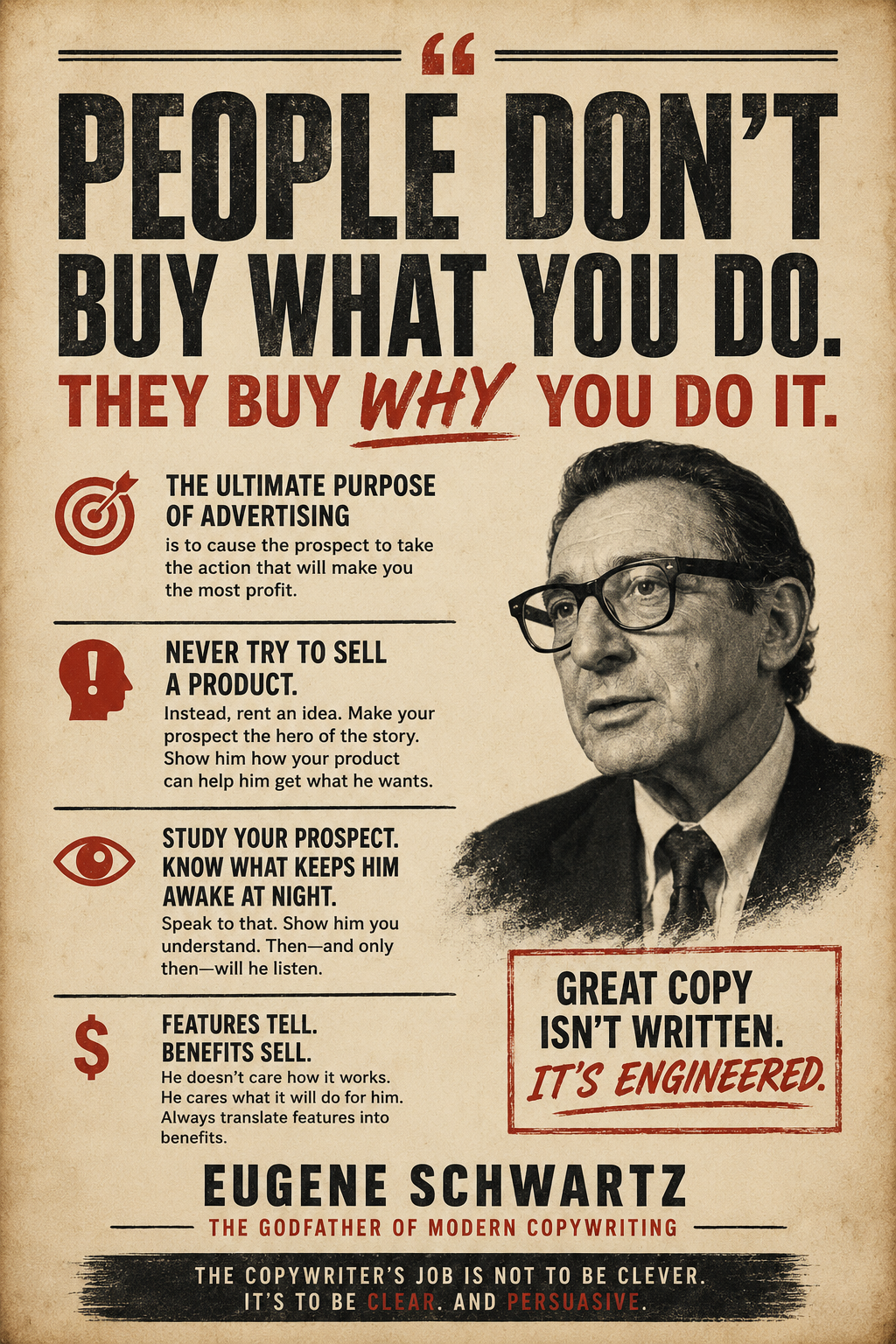
That’s when I went deep on Eugene Schwartz’s work, specifically his concept of market awareness. Schwartz was a direct response copywriter in the 1960s who wrote what many consider the most important book on copywriting ever published: Breakthrough Advertising. In it, he laid out a framework for understanding not just who your audience is, but where they are in their understanding of their own problem and the solutions available to them.
Market awareness describes how much a potential customer already knows: about their problem, about possible solutions, and about your specific offer.
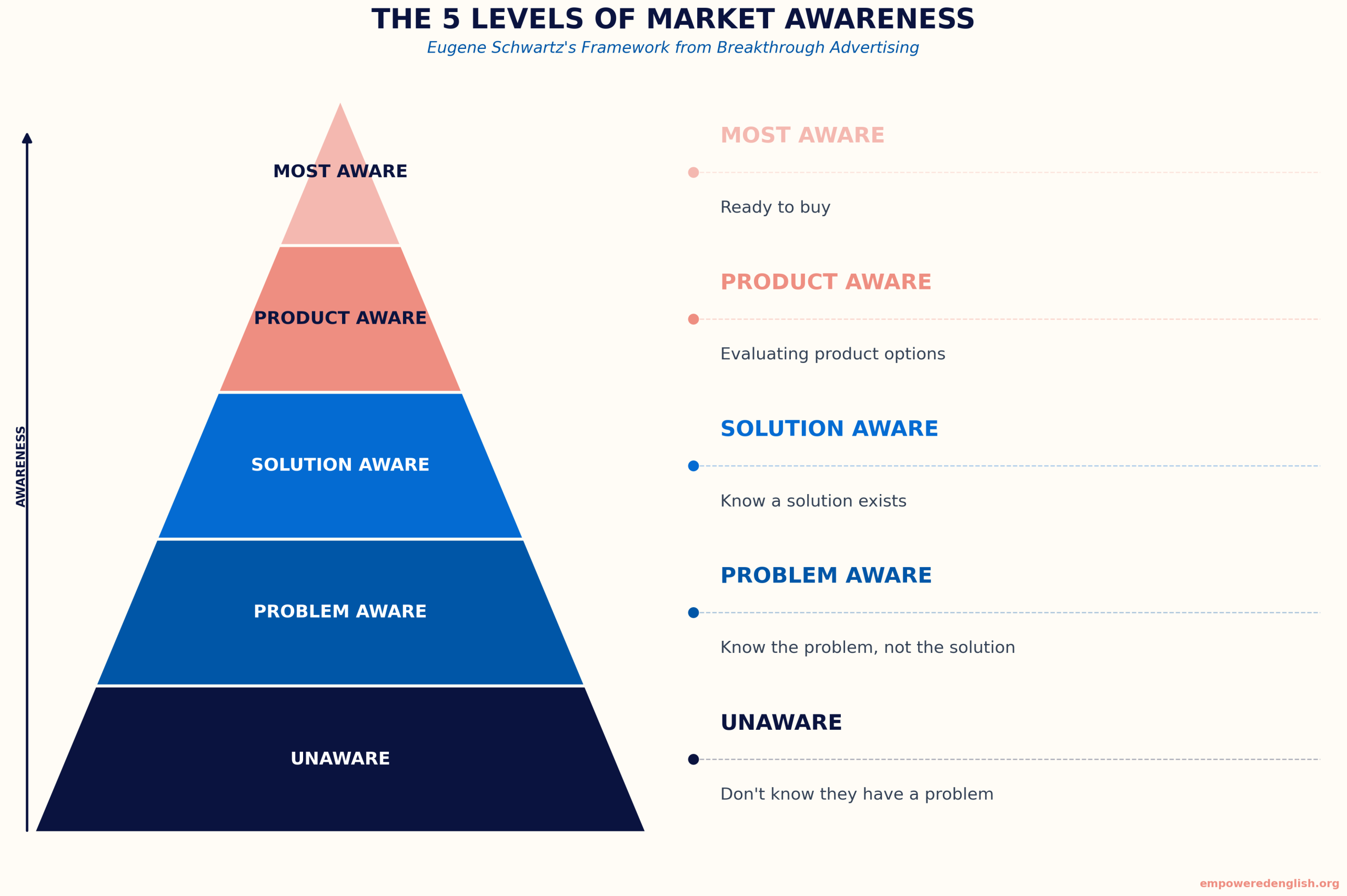
Schwartz identified five distinct levels of market awareness, and the level your reader is at should completely shape the copy you write for them. Write for the wrong level, and you’ll either confuse people who aren’t ready or bore people who already know what you’re selling.
But get it right, and your copy feels like it was written specifically for that person at that moment in their life, which is exactly the effect you want.
I’ve applied this framework across hundreds of pieces of copy across all areas of the sales funnel, from blog writing to product copywriting, and it’s one of the most reliable tools I have. Let me walk you through each level and what it means for your copy.
The Five Levels of Market Awareness
 Level One: Completely Unaware
The unaware prospect doesn’t know they have a problem. They’re not searching for solutions because they don’t yet recognise the pain. Your job at this level isn’t to sell; first, you need to introduce the reader to a new way of seeing their situation. You might write about a relatable frustration or a common experience without ever naming a product. Think of it as planting a seed, laying the groundwork for future brand awareness.
This is the hardest audience to write for because you can’t lead with your offer. You have to start with their world (their daily experience, their vague dissatisfaction, their sense that something isn’t quite working) and gently connect that to a larger problem they haven’t named yet. Content marketing does a lot of heavy lifting here.
Level Two: Problem Aware
This reader knows something is wrong but doesn’t know what to do about it. They’re searching for answers, reading articles, maybe complaining to colleagues. They know the pain but haven’t found the cure. Your copy should validate their experience and introduce the solution category without naming your specific offer yet.
This is where empathy-led writing shines. When you can articulate someone’s problem better than they can themselves, they immediately trust you. It’s not a pitch yet – you’re showing them you understand.
Level Three: Solution Aware
Now your reader knows solutions exist. They’re comparing options, reading reviews, weighing up different approaches. They know they need a copywriter, for example, but they’re not sure which one or what kind.
At this level, your copy needs to differentiate. What makes your approach different? What’s your philosophy? Why should they choose your method over another?
This is where case studies, process explanations, and positioning statements do a lot of work. You’re not just proving you can solve the problem – you’re proving you’re the right person to solve it.
Level Four: Product Aware
This prospect knows about you specifically. They’ve seen your website, maybe read a few of your blogs, perhaps heard your name mentioned. They’re interested but not yet convinced. There’s still some friction. Maybe it’s a price concern, a timing issue, or a lingering doubt about whether you’re the right fit.
Copy for this audience needs to address those objections directly. Testimonials, guarantees, and specific results matter here. You’re removing the last remaining barriers between interest and action.
Level Five: Most Aware
This reader is ready to buy!
They know exactly what they want and they’ve decided they want it from you. They just need a clear, easy path to take action. Your conversion copywriting here should be direct and frictionless – a strong CTA, a clear next step, and nothing that creates unnecessary hesitation.
The mistake most businesses make at this level is over-explaining. When someone is ready to say yes, the worst thing you can do is give them more to read.
Why The Market Awareness Framework Changes How You Write Everything
 Understanding the 5 Eugene Schwartz levels of awareness isn’t just useful for sales pages. It shapes every piece of content you create.
A blog post targeting someone at Level One looks completely different from an email sequence targeting someone at Level Four. The tone, the structure, the amount of context you provide, the directness of your CTA, all of it shifts based on where your reader is on the scale.
One of the most common mistakes I see is businesses writing all their copy as if everyone is at Level Five. They lead with features, prices, and CTAs to book a call, but their audience is still at Level Two, trying to figure out if they even have the problem your service solves. The result is copy that feels pushy and irrelevant, because it’s asking for a commitment the reader isn’t ready to make.
The reverse also happens. Some businesses are so cautious about selling that they write everything for Level One, endlessly educating without ever moving the reader toward action. They build an audience that loves their content but never buys.
The Eugene Schwartz 5 levels of awareness framework gives you a way to audit your content mix and make sure you’re creating material for every stage of the journey. It also helps you write more precisely for each piece, because you know exactly who you’re talking to and what they need to hear.
How I Use This in Practice
When I take on a new copywriting project, one of the first questions I ask my client is: who is this for, and what do they already know?
If a client wants a landing page for a cold traffic campaign, I know I’m writing for someone at Level One or Two. If they want a sales page for a warm email list, I know I need to deliver email copywriting for readers at Level Four or Five. The awareness level determines the entire approach before I write a single word.
I also use this framework when auditing existing copy that isn’t converting. Nine times out of ten, the issue is a mismatch between the audience’s awareness level and the level the copy assumes. Fix that mismatch, and the results change dramatically.
You’ve unlocked 10% off your first bill ?
Looking for outstanding copy that drives conversions? Book a free chat about your project and get 10% off your first bill when you quote “BLOG”.
Write for Where They Are, Not Where You Want Them to Be
Market awareness is ultimately about respect. It’s about meeting your reader where they actually are, not where you wish they were. When you write copy that assumes too much, you lose people. When you write copy that assumes too little, you bore them. Getting the level right is what makes copy feel relevant, timely, and worth reading.
If you’re working on conversion copy right now and it’s not performing as expected, I’d encourage you to look at the awareness level first. Ask yourself honestly: does this copy assume my reader already knows things they might not? Or is it so cautious that it never actually asks for anything? The answer is usually somewhere in there.
Empowered English works with businesses to write copy that speaks to the right audience at the right stage, whether that’s SEO content writing that builds awareness or conversion-focused copy that turns warm prospects into clients. If you want professional copywriting services that actually work at every awareness level, book a quick call with our team.
Looking to hire a copywriter?
Our team of expert writers is poised pen-ready for your brief. Book a free call and let’s have a chat about how we can get that project off the ground.
Frequently Asked Questions
Market awareness refers to how much your potential customer already knows about their problem, the available solutions, and your specific offer.
Eugene Schwartz identified five levels, ranging from completely unaware to ready to buy. Understanding your audience’s level helps you write copy that meets them where they are, rather than assuming knowledge they don’t have.
The five levels are: Unaware (the prospect doesn’t know they have a problem), Problem Aware (they know the problem but not the solution), Solution Aware (they know solutions exist but not your specific one), Product Aware (they know your offer but haven’t committed), and Most Aware (they’re ready to buy and just need a clear path to action). Each level requires a different copywriting approach.
Look at where they’re coming from. Cold traffic from social ads tends to be at Level One or Two. People who found you through a search for a specific solution are likely at Level Three. Your email list of existing contacts is probably at Level Four. The channel and the context usually tell you a lot about where your reader is in their journey.
When your copy assumes more awareness than your reader has, it feels pushy or confusing. They’re not ready for the ask. When it assumes less, it feels slow and irrelevant to someone who already knows what they want. Either way, the mismatch creates friction that stops people from taking action.
Absolutely. In fact, this is one of the most useful applications of the framework. Blog posts, social media content, email sequences, and video scripts can all be mapped to awareness levels. A well-rounded content strategy covers all five levels, guiding readers through the journey from first recognising a problem to becoming a client.
The Five Levels of Market Awareness
- Level One: Completely Unaware
- Level Two: Problem Aware
- Level Three: Solution Aware
- Level Four: Product Aware
- Level Five: Most Aware